
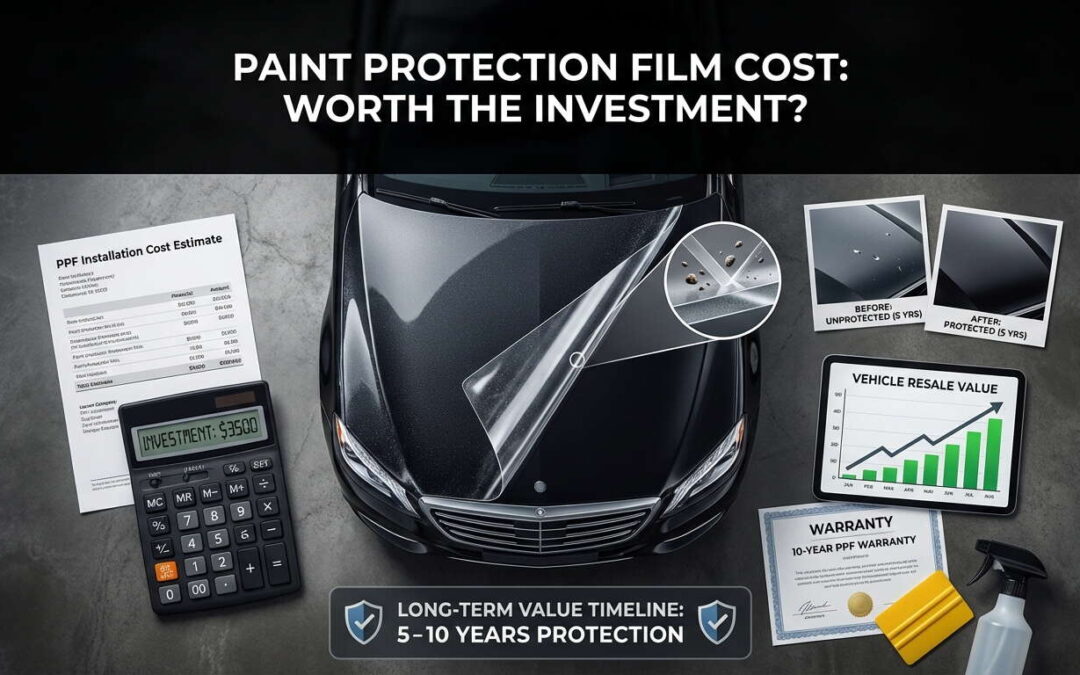
Paint Protection Film Cost: Worth the Investment?
Vehicle owners considering paint protection frequently ask the same question: does PPF justify its price? With costs ranging from several hundred to several thousand dollars, this deserves careful consideration. The answer depends on your driving habits, vehicle value, and ownership timeline.
This guide breaks down actual PPF pricing, examines the return on investment, and helps you determine whether paint protection makes financial sense for your situation.
What Determines Paint Protection Film Pricing?
Several factors influence the final cost of a PPF installation. Understanding these variables helps you evaluate quotes and select appropriate coverage for your needs.
Coverage Area
The amount of surface area protected directly affects pricing. More coverage requires additional material and labor hours.
Partial front packages covering the bumper, partial hood, and mirrors typically range from $600 to $1,200. This entry-level option addresses the highest-impact zones where rock chips occur most frequently.
Full front coverage expands protection to include the complete hood, full fenders, headlights, and side mirrors. Expect pricing between $1,500 and $3,000 for this popular option that many vehicle owners consider the best balance of protection and value.
Complete vehicle coverage protects every painted panel. Full-body installations generally cost between $5,000 and $8,000, with larger or more complex vehicles falling at the higher end.
Vehicle Size and Complexity
Larger vehicles require more material. A compact sedan costs less to protect than a full-size truck regardless of which coverage tier you select.
Body complexity matters equally. Vehicles with aggressive styling, vented panels, sharp body lines, or extensive trim demand greater precision during installation. These features increase labor time and require additional expertise to wrap properly without lifting or bubbling.
Film Quality
Premium films from established manufacturers cost more than budget alternatives. However, higher-quality films typically include advanced features like superior self-healing properties, hydrophobic top coats, and enhanced UV resistance.
Budget films may save money initially but often provide shorter lifespans and fewer protective benefits. When evaluating quotes, consider film brand and included warranty coverage alongside the bottom-line price.
Installer Experience
Professional installation in a controlled environment costs more than work performed in general automotive shops. However, proper installation technique directly affects how the film performs and how long it lasts.
Certified installers working with specialized equipment deliver results that maximize your protection investment. Poor installation leads to premature failure regardless of film quality.
Calculating Your Return on Investment
Evaluating PPF requires looking beyond the initial expense to consider long-term financial impact. Several factors contribute to the overall value equation.
Resale Value Preservation
Research indicates vehicles with paint protection film can retain up to 15 percent more resale value compared to unprotected vehicles. This percentage translates to significant dollars on higher-value automobiles.
Buyers recognize preserved paint condition immediately. A vehicle showing minimal wear commands premium pricing compared to similar models with visible chips and scratches. Data suggests PPF-protected vehicles also sell approximately 20 percent faster than unprotected equivalents.
Avoided Repair Costs
Consider the expense of addressing paint damage without protection. Professional touch-up work for rock chips adds up over time. Panel repainting typically costs $500 to $1,500 per panel depending on your vehicle and local labor rates.
A single hood repaint can approach or exceed the cost of protecting that panel for nearly a decade. When you factor in multiple panels experiencing damage over several years of ownership, protection costs often compare favorably to cumulative repair expenses.
Preservation of Original Paint
Repainted panels, even when expertly executed, rarely match factory finish perfectly. Original paint in excellent condition represents a selling point that discerning buyers specifically seek.
Once factory paint suffers damage requiring repair, that originality disappears permanently. For vehicles where maintaining original condition matters, PPF provides protection that repainting cannot replace.
Long-Term Cost Analysis
Consider a practical example. A $2,500 full front installation spread over eight years of ownership averages approximately $312 annually. Compare this to the time, expense, and diminished appearance of accumulating damage over the same period.
Vehicles protected with quality film typically show about 30 percent less visible paint damage after five years compared to unprotected automobiles. This reduced wear maintains aesthetic appeal and supports stronger pricing when selling or trading.
Who Benefits Most from PPF?
Certain ownership situations maximize paint protection film value. Evaluating whether your circumstances align with these profiles helps determine if the investment makes sense.
New Vehicle Purchasers
Installing PPF immediately after purchase means protecting pristine paint from day one. The film preserves perfect condition rather than covering existing imperfections. New car buyers also benefit from the longest possible protection timeline relative to their ownership period.
Luxury and Performance Vehicle Owners
When your automobile carries a higher purchase price, maintaining its condition becomes more financially significant. Premium brands and performance models often feature softer paint formulations more susceptible to damage from road debris.
The percentage of value preserved through protection translates to larger dollar amounts on expensive vehicles. A 15 percent resale advantage on a $60,000 vehicle represents substantially more than the same percentage on a $25,000 car.
Long-Term Owners
If you typically keep vehicles for five years or longer, the protection investment spreads across more years of use. The annual cost of protection decreases with each additional year of ownership.
Conversely, owners who trade vehicles every two to three years may find the investment harder to recoup. Lease agreements spanning three years or less provide limited time for protection benefits to accumulate.
Highway Commuters and Harsh Environment Drivers
Frequent interstate travel means constant bombardment from gravel and debris. Vehicles regularly driven at highway speeds face significantly higher exposure to paint-damaging impacts than those used primarily for short local trips.
Memphis drivers understand the challenges of Southern summers and occasional winter weather. UV exposure degrades unprotected paint over time, while road treatments during winter months can cause damage. These environmental factors make protection particularly worthwhile for vehicles regularly exposed to the elements.
When PPF Might Not Be Necessary
Paint protection film makes less sense in certain circumstances. Honest evaluation of these factors helps avoid unnecessary expense.
Primarily garaged vehicles: If your automobile rarely leaves protected storage and sees limited driving, exposure to damaging elements remains minimal. The protection premium may exceed practical benefit for vehicles driven only occasionally.
Older vehicles with existing damage: Proper PPF installation requires clean, undamaged paint surfaces. Installing film over existing chips, scratches, or swirl marks locks those imperfections in place permanently. Paint correction before installation adds to total costs, making the combined expense difficult to justify on heavily depreciated vehicles.
Short-term ownership plans: If you plan to sell or trade within one to two years, recouping installation costs through preserved resale value becomes challenging. The math favors longer ownership periods where protection benefits accumulate over time.
Comparing PPF to Other Protection Options
Understanding how paint protection film compares to alternatives helps clarify its unique value proposition.
Ceramic Coatings
Ceramic coatings provide chemical resistance, UV protection, and enhanced gloss at lower cost than PPF. They make washing easier and help maintain shine between details.
However, ceramic coatings offer minimal defense against physical impacts. Rocks and debris penetrate coatings and damage underlying paint despite the protective layer. For impact protection, PPF remains the only effective solution.
Many vehicle owners combine both products. Applying ceramic coating over cured PPF creates comprehensive protection addressing both physical and chemical threats. The ceramic layer adds hydrophobic properties while the underlying film absorbs impacts.
Complementary Services
Window tinting offers another way to enhance both appearance and interior protection from UV exposure. While it serves different purposes than PPF, combining services provides comprehensive vehicle protection inside and out.
Vehicle wraps change vehicle appearance through color or graphics while providing some paint protection. Some owners apply PPF to high-impact areas before wrapping, creating underlying protection that extends original paint preservation.
Traditional Waxes and Sealants
Waxes and sealants require frequent reapplication and provide temporary rather than lasting protection. These products enhance shine and offer some environmental protection but cannot prevent physical damage from road hazards.
The ongoing time and product expense of maintaining wax protection accumulates over vehicle ownership. PPF provides lasting protection without recurring maintenance requirements.
Making Your Decision
Determining whether paint protection film represents a worthwhile investment requires honest assessment of your specific situation.
For owners of newer or high-value vehicles who plan extended ownership and regularly drive in challenging conditions, PPF typically delivers positive return on investment. The combination of preserved appearance, reduced maintenance needs, and enhanced resale value often exceeds installation costs over time.
For owners of older or budget vehicles with short ownership horizons and primarily low-risk driving, the investment calculus changes. Protection benefits remain real, but financial return may not justify upfront expense.
Consider scheduling a consultation to discuss options specific to your vehicle. Professional assessment helps balance protection goals with practical budget considerations while identifying the coverage level that makes sense for your situation.
Quality installation matters as much as film quality. Properly installed premium film delivers years of protection, while poor installation fails regardless of material quality. Research installer credentials, review work examples, and understand warranty coverage before committing.
Paint protection film represents one of the most effective investments available for preserving automotive appearance and value. Whether that investment makes sense for you depends on factors only you can evaluate. Understanding costs, benefits, and alternatives positions you to make an informed choice serving your specific needs.